Voodoo in Haiti

Voodoo has a genuine component to it in Haiti. There were occasional voodoo ceremonies in the backcountry.  I was invited to go one time, but it creeped me out, so I declined.  It is induced by a voodoo powder made from a sea snake and is extremely potent.  It is sprinkled on doorsteps to lay a ‘Curse’ on the inhabitants and is absorbed through their feet. It was sometimes administered by a voodoo “priest” that put it in a red hanky and thrown into the face of the victim. Most of these priests were just charlatans using a powerful drug to induce a highly hallucinogenic powder that creates a coma-like state. Allowing the body to move but sustain a trance-like state that can last for quite some time, and the victim(s) act like the walking dead or Zombies.  This isn’t the Hollywood stuff but a real state of mind, nothingness altering the victims’ state of mind. Frantz was a self-ascribed voodoo priest, but being Frantz, it was all a circus act for his amusement. However, it did serve us well one night when we were returning to port au prince from the mine.

Because at this time nobody knew he was in charge, paramilitary groups set up ad hoc checkpoints to shake down travelers or harass people that were affiliated with whichever side they didn’t like. We were stopped at one of these armed checkpoints that were set up after we got to the mine, and there was no way around it.  I was extremely nervous thinking that within minutes I might be on a giant spit-roasting over an open fire with Zombies dancing around me like Dante’s  inferno.  Frantz calmly stopped the Honda and harsh words began to fly and I am on the verge of panic.  Frantz looked over at me and began to smirk.  I failed to see any humor in our present situation. He said, “don’t worry, boss I’ll handle this.  He reaches behind his seat and pulls out the mason jar full of bones and pulls out this red hanky and begins to raise it toward the window and yelled something in Creole. Instantly the thugs ran away and left their weapons behind.  I was nonplussed, and Frantz turned to me and said, “works every time! I scared the hell out of those guys,” as he laughed like hell, we sped away to Petionville and the safety of his home.

The religion in Haiti is overwhelmingly Catholic, but many offshoots mix the Voodoo ritual into the Catholic ritual, and it gets weird.  As poor as these folks were, I remember seeing school kids walking along the road dressed in their plaid and Khaki uniforms heading to Catholic School barefoot and wearing probably THE ONLY GOOD CLOTHES THEY HAD. Out of this Catholic top-down administration, came a pedophile priest named Aristede who’s parish was about 5 miles from the mine. He would go on after inciting rebellion against the regime to become president of Haiti, in a sham election backed by our nation-building US government. This guy was a bad guy and elevated Baby Docs’ corruption and cruelty to a whole new level.  We were long gone by this time, thank God. Soon after all of this, Haiti has become a broken narco-state where no one is safe on the streets, and even innocent Christian mission trips are on the Special Forces radar for rapid deployment and monitoring in case of attacks. It’s a different Haiti these days mostly for worse if that’s possible.

As we return to our mining days in the chaos after Duvalier left, General Henri Namphy took over the reins of government to try to bring peace and stability.  I met him several times, he had a wonderful sense of humor, and we had dinner every now and then when he came to the states. He was military all the way, and I think he loved his country.  Unfortunately, the power plays between old Duvalier holdovers, the inept US nation builders, the Cuban communist infiltrators, the narco predators, and a bankrupt nation looted by crooks and propped up with US taxpayer dollars leaking out to the same old bad guys; left nothing changing for the better. As we were trying to hang on, the Reagan Administration had a meeting of American businesses that were invested in Haiti to encourage us not to cut and run.  All of us were invited to the Old Executive Office Building for a briefing, from then-Secretary of State Shultz, and reception after, at Haitian Embassy (propped up again by American taxpayers). It was primarily a show event with nothing but “hang in there boys. We’ll send in the marines if we have to”. Yeah, right, no marines, no cash you’re on own boys. This was a miserable trip for me, especially since I made the mistake of drinking bottled water at a decent Port au Prince restaurant/ discotheque instead of Pepsi or the local Prestige beer and got sick and had the runs.  I barely got through the briefing and the reception between frequent visits to the bathroom.

As things were getting worse, I  came into Port au Prince on some business right from the mine with Bauxite dust on my jeans and somewhat disheveled.  I decided to stop by the Embassy and try to make an appointment to see Aubrey Hooks, to see if we can figure out what the hell is going on.  To my surprise, the Marine Guards were waved aside, and I was ushered right into his office.  What I quickly found out was that he was asking most of the questions, ranging from we heard you were at a restaurant and seated at the table across from you, was the head of the Cuban advisors in Haiti. He wanted to know everything I knew or heard about Cuban involvement in Haiti. I said I didn’t know, squat. I’m trying, among other things, to keep my mining operation alive and keep my army garrison from shooting each other in the streets of Miragoâne. So, could you break the log jam on some US funds or send the damn Marines or something? We’re about to go under.  He said in diplospeak he’d see what he could do, but please keep him informed if I hear anything about the Cubans.  Right like I’m going to make a collect call from the payphone in Miragoâne to the US embassy.  A side note, the most advanced way to communicate anything of high importance on a business level was “teetype” or a new computer program that we could run on our TRS 80 using a teletype program. That would get us through to the Citibank in downtown Port au Prince, who ran the bank, also using a TRS 80 as their “main frame.” This was printed and couriered to wherever we could get it too.  It was so slow that you’d type in words, and it would take several seconds for each letter to come across the screen after you typed it. But boy, we thought we were on the cutting edge.  Take that Al Gore and you thought you invented the internet. We were pioneers 😊. 

I wondered why Aubrey Hooks was always wanting information as the Business Attaché to the Embassy and never gave much out and how he always seemed to know where I was and how to get a hold of me. It turns out many years later after we left Haiti that he was the station chief for the CIA. The pieces fit together a little bit better now in hindsight.

After many efforts to resuscitate the Haiti-America Mining company, it imploded.  Our company lost a big chunk of our family fortune. 100 Haitians AND THEIR FAMILY returned to the poverty that they have had since the French and worse oppression than Baby Doc.  Gone is the future of good ole capitalism administered by caring and yes God-loving naive Americans and a chance for a better future. We gave it our all. Goodbye, Esnyder and God be with you.

Haiti Priests and Prostitutes

This next installment in my Haiti experience is the start of my first visit as a naive young American business guy with an accounting degree that passed the CPA exam and who thought that I could rule the world.  My first experience in Haiti was getting off the Air Haiti airplane at Port au Prince.  When they opened the door, the overwhelming heat, humidity, and the overpowering smell of diesel fumes and body odor assaulted my nose.  I thought, what the hell am I getting into?  I was met at the airport by a “Christian” businessman who was a lot more hustler business guy than Christian, but he introduced me to my soon to be Haitian guy who knew everyone, and everyone liked him. He was related to Mario Theard, who was the cousin of Baby Doc, that I paid off in the last episode.  Frantz Theard was a character, a likable scoundrel married to a lovely wife that graciously hosted us many times at their modest but comfortable home in Petionville.

My first night was at the Holiday Inn, across the street from the Presidential Palace (subsequently destroyed in an earthquake). This place was not your, “no, but I did spend the night at a Holiday Inn” type of place. It was walled in where doors and windows faced outside, and the walls were topped with mortared in shards of broken glass bottles that from a distance looked like colorful artwork.  They were the last line of defense against anyone foolish enough to scale the walls.  As Frantz was about to drop me off at the entrance, I a 12-13-year-old girl and her friends approached, they spoke in broken English, and for a quarter she would perform carnal services for me. After my initial shock and Frantz attempting to shew her away, I pulled out a $5 bill, gave it to her, and said, “Your day is done go home to your family.” Of course, she was probably going to her pimp and living on the street.  I’ve never been to a place like this where human dignity could be bought for 25 cents!

Similarly, a few days later, as we rode in Frantz’s non-air-conditioned Honda down through the streets of the city. We stopped at a street corner to let a TAP-TAP (private colorful bus-like transportation) pass.
 undefined
A young zombie-like man came alongside the car (I had the window down because there was no air conditioning, and proceeded to give a public showing of his private parts at my head level way to close to my face and indicated that was also for sale.  I wanted to lose my griot right there. Welcome to Haiti, blanc! 

After a meeting with Baby Doc and his underlings, to do a ceremonial signing of the mine lease at the Presidential Palace and drinking coffee out of little cups (thank God they were little since I don’t drink coffee). This stuff tasted like the Bunker “C” oil that we used in the generator at the mine with a little Louisiana hot sauce to boot.  This stuff was awful, but we didn’t want to insult this brutal dictator’s hospitality.

Baby Doc was married to Michelle Duvalier, who was smoking hot and known for her lavish fashion spending sprees in Paris on the poor country’s dime.  She was Imelda Marcos on steroids.  Baby Doc looked like Baby Huey, and Bill Cosby’s Fat Albert all rolled into one with the intellect of an ameba. Michelle “married” him for what they could loot from the nation’s treasury and bribes.

It was on the American Embassy to schmooze with the diplomats and had my first meeting with the business Attaché Aubrey Hooks.  He welcomed our venture into Haiti and gave us plenty of diplomatic double-speak to stroke our ever-increasing egos.  The embassy, also a small fortress,  across from the Palace.  With a nearby Haitian Army barracks (the military were soldiers first and stayed as much as possible out of the politics and corruption).  The last I saw of Baby Doc was in his high-speed Mercedes motorcade heading down the narrow two-lane road coming down from Petionville, running everyone off the road including Frantz and me. He always traveled fast so that no one had a chance to stop him and drag him out of the car and pummel him.  The people hated but feared him.

Our next stop was M street in Washington, DC. We had a meeting with Over Seas Private Investment Corporation (OPIC) to procure political risk insurance to guard against losing our investment in case of the political instability of the host government. We were ushered into a room with two smartly dressed Harvard MBA Grad CPA ladies that were to interview me to see if we passed the smell test for financial stability and expertise in the mining field.  The Mining part was easy enough; we had three generations of Waelti’s mining since the 1940s.  The financial part was intense. I had to answer questions line by line on our financials and tax returns going back three years.  Two hours later, I felt like I just had a financial colonoscopy, and they weren’t gentle. My marketing guy was with me and said, “Geez! That was like the Alamo, but you were still standing!  After that, Ed and I got a cab to take us over to Blackies (the best steak house in DC) had a steak and some beers. We were watching TV when the news came across that Baby Doc Fled Haiti that morning (with Mario on board).  We just about lost our steak, and subsequently, our political risk insurance was not in force, and we were hung out to dry. Days later, I got a call from Dean, from the only phone in Miragoâne, a community phone booth. There were no cell phones, and the Haitian phone service could be surpassed by two cans connected by a piece of string. (by the way, Bill Clinton, later scammed Tellico the Haitian telephone company for millions on back door deals way to go Clinton Foundation! Anyway, I heard gunshots in the background and feared that violence had reached the mine. As I could barely hear Dean, he said not to worry. We still had the local garrison of the army on our payroll and that two of them got into it, having a Quick Draw McGraw shoot out in the street, but it was over, and nobody got killed.  When they ran out of ammo, they both went down to the little cantina and drank the afternoon away. Another day in the life of several fools to play off the old song from the ’60s.

Haiti – The Backstory – Part 1

Warning – graphic descriptions follow

I was planning to give insights to the main title of my blog today since I have rambled on about everything but depression. Well, today is not a lot different since I’m too depressed to write about that topic just now, ironically. I’m going to share with you the back story about my Adventures in Haiti.  We were there between 1984 – 1987. 

To frame this right, I need to digress into a little background of what I know about the Haitian people.  In a nutshell, what I experienced during my time there are people, who are poorer than anything the US has ever seen, that always wearing a smile and suffer indignities with grace.

There were the mulattos that were family lines of intermarriage over generations with French whites.  There are incredibly dark-skinned black folks.  The mulatto’s post-revolution assumed a status among the population and discrimination, not unlike ours in America back in the post-reconstruction days. The Haitian black people, like the United States, consisted mainly of slaves in the colonial days and beyond and were under the French, explaining why French and English were interwoven with African dialects to form what most Haitians speak as Creole.  While they were speaking Creole, you could hear the occasional English, and proper French words sneak in.  That is why I could navigate by communicating with them in English and picking up a little French.  If you spoke fluent French, communication was rather easy, especially among the mulatto society.

The people have a long history of tyranny, and under the French working in the sugar plantations that made American cotton plantations look like Club Med.  As I learned from tradition, the French had a unique form of punishment and sick amusement that was called blasting a black’s ass.  This consisted (sometimes publicly) of restraining some hapless slave, inserting a stick of dynamite into his rectum, and lighting the fuse. Later on, when I was there,  a little more civilized form of discipline, if you could call it that, was administered by order of Baby Doc https://en.wikipedia.org/wiki/Jean-Claude_Duvalier and his father Papa Doc https://en.wikipedia.org/wiki/Fran%C3%A7ois_Duvalier, the undisputed dictators of Haiti. By ordering the  Tonton Macoutes https://en.wikipedia.org/wiki/Tonton_Macoute, their paramilitary thugs to enforce.  Unlike the police, they wore blue shirts hung out under the trees, sometimes in the back of a pickup armed with machetes and an occasional pistol and waited for something or someone to do.

However, the one benefit to white foreigners like us, civil order was well enforced, and a “blanc” (white) never feared at any time or anywhere.  Since the ruling class would do whatever it took to protect the flow of French, American, and Canadian cash into the country with which they sustained themselves. They maintained a close-knit oligarchy of trade and essential services like fuel, tires, food, and autos. These essential services were only a luxury that cash bearing foreigners and the Haitian Elite were able to avail themselves.  A quick trip down any Port-au-Prince street would reveal the visual and overpowering odorous smell of feces, urine, and body odor.   There were two economic classes: one for the elite and one for everyone else.  What I found surprising was that transactionally they were segregated from each other.  For example, our mining operation paid the going wage of $3 per day for unskilled labor and maybe doubled that for equipment operators and mechanics. Now before you label me a capitalist pig, this sub-economy operated on a different scale.  Goat beans and rice on the black market were purchasable within the means of the lower working class.

To illustrate this difference more clearly in Pétion-Ville, a more affluent nearby town of Port au Prince.  A modest, cozy, and excellent restaurant called Chez Gerard was located; Where the elite went after the “workday” in Port au Prince ended, which was usually about 2 in the afternoon.  Here the real business got done over drinking and food. This place had the best blackened prime rib and all the sides of any five-star restaurant on the planet.  We later learned that the whole place was bugged by either the CIA or Baby Doc; we were never sure, so the conversations were always guarded.  During one evening business meeting, the check for an evening of drinks and food for five people exceeded our entire day’s payroll at the mine.  While we dined on prime rib, I’d look over the railing at our open-air cabana and not 10 feet away I saw this massive pile of blankets, and it seemed to be alive.  I quickly realized that it was at least 50 people and families sleeping there.   I had a hard time finishing my food and wondered if these people had ever had anything more than griot (pronounced gree·ow -generally made with pork but in the absence of pork, which was regularly, using goat) in their entire life. After this introspection,  it was back to business, discussing how we were to arrange to get more concessions from the “government,” how and who we had to pay off, and how much we were going to have to pay for fuel after “taxes.”

Our mining operation was in the middle of this, 50+ miles away from the center of corruption in Port-au- Prince in this little town of Miragoâne.   Incidentally, within 30 days after we opened the mine good ole capitalism did its magic. The cobbler opened his shop; the local markets came back to life, and the local economy flourished overnight.  Our ramrod Dean would go into town the night before payday to pick up little sundries because he knew that everything would be sold out the next day.     Miragoâne was a smuggling port for black-market supplies of beans and rice.  Virtually none of this commodity could be grown successfully in the country, making this a quasi-black market, because instead of paying the exorbitant official duty “taxes,” the importers paid some thug at the harbor to offload cargo with the government fully aware.  Another layer in a corrupt government would get a piece, and so on up the hill ending at Baby Docs personal account on its way out with what he couldn’t spend there on the island to Swiss or French foreign banks.

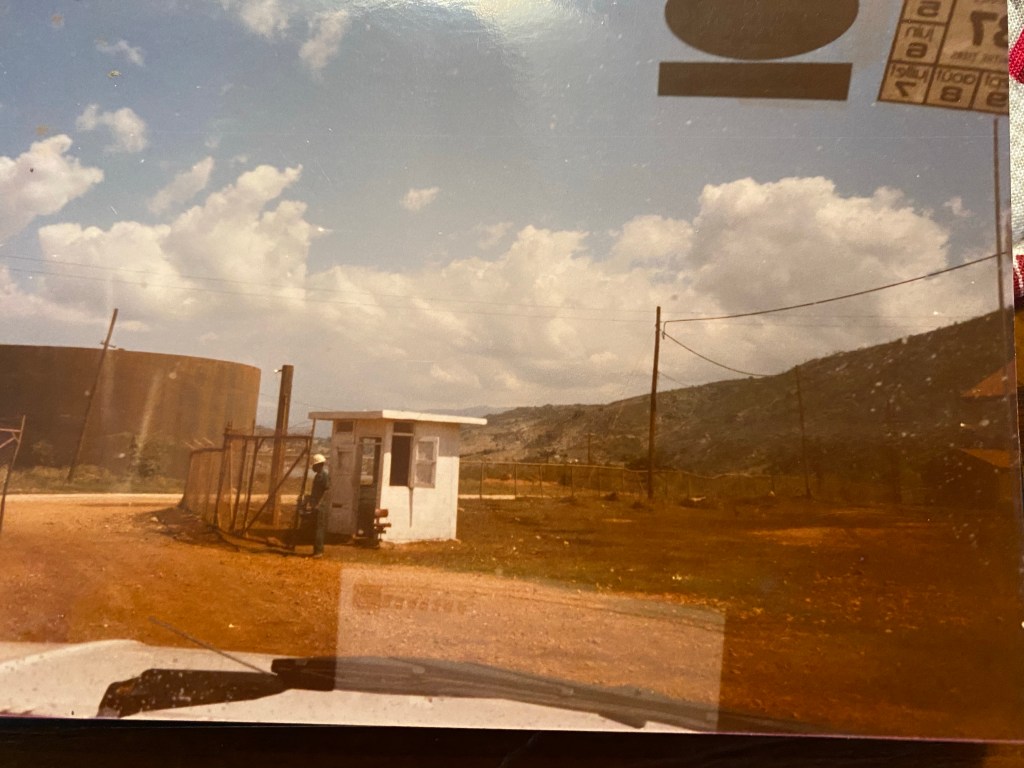
We had an old but huge Waukesha diesel-powered generator (that was removed from a WWII era ship) at the plant, powering the mine.  The Reynolds Bauxite mine needed this much power when they began ship loading.  At non-peak times, we bought power from the little town down the road called Petit-Goâve.  Their central generator, for the whole town, was a small 671 Detroit Diesel 300KW generator, and the wires to and from and around town looked barely heavier than your average American construction site extension cords. When we cranked up our generator, we would back feed power to everyone up and down the line. Even air conditioners could be powered again. Our behemoth generator ran on bunker C heavy oil (one step up in the refining process from tar) that they use to power ships, and we had a 20,000-gallon fuel tank left full from Reynolds when they left the mining operation unable to stomach any more of the corruption. We figured that would last us until our first ship came in, and we could snack on the ship’s bunker C.    

The purpose of our being there was not the bauxite https://en.wikipedia.org/wiki/Bauxite but what was under it.  Pure white calcium carbonate https://en.wikipedia.org/wiki/Calcium_carbonate.  It was soft and easy to mine compared to hard white stone in the US. The calcium carbonate was such a high quality that it could be used in everything from pharmaceuticals to paper to swimming pool marcite to any plastic filler that needed an extremely white color.   We had ports and buyers interested in Florida to the eastern New England coast. The international magnate started by our little Florida company seemed to be on its way. Stay tuned for part 2, where we’ll get into the intrigue and excitement.   

A Tale of Two Snyders

Originally Written 8-19-2018 – 1 month post stroke before any seizures

Pastor Jeff,

As I try to rehab myself, I wanted to share a story (true story) with you because in my foggy world I saw your post of the guy cutting the grass with scissors.  The sending of this is a better alternative for (maybe not so much for the receivers) me as I work on my post-stroke eye and hand coordination than what my occupational therapist wants to do which is to practice picking up paneling nails with tweezers and place into 1/8 inch holes on a pegboard  NOTTTTTTTTTT!  Anyway, going back to the early 1980s while Charley Wilson was doing his war with the CIA in Afghanistan.  I was knee-deep in a mining project in Haiti, taking over an old Reynolds Bauxite mine (used ore for aluminum).  Through a journey with as many twists and turns as Charley had including voodoo, Tonton Macoute and a little CIA thrown in, and of course Baby Doc.  This is another whole story, but I wanted to tell you about was an amazing Haitian named “Esnider” (I’m spelling for phonetic purposes only since no one could write his name) and my ramrod at the mine was named Dean Snyder. 

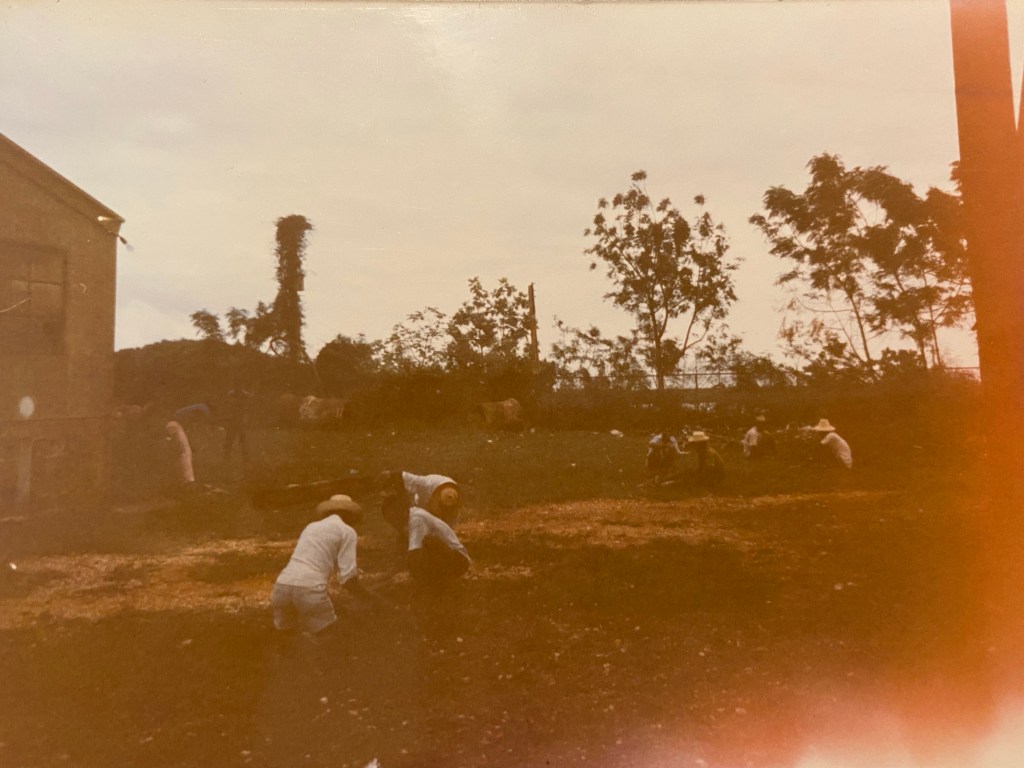
Dean was a no-nonsense ex-Navy guy who was everything you would expect, hard-hitting, hard-drinker and cussed like a sailor, that would make even me blush.  I would fly into Haiti every Friday and back on Sunday night because we had the family mining company running here in Florida at the time. The purpose of this trip was to check on our progress and bring American money in for expenses, payroll, schlep machine parts, etc.  On this trip, when I approached the gate at the compound I noticed among the hustle and bustle of men and machines a single thin Haitian young man cutting the grass while he sat down with a machete.  I thought this odd and a waste of manpower especially since the guy was just sitting there to boot.  Being a bean counter myself, I addressed Dean and said, “We are hiring over 100 people per week on a rotation basis why do we have this guy sitting on the ground cutting grass with a machete?”   The tough sailor said sheepishly that the man cutting the grass is named Esnider.  He has polio and he hobbles on the ground to get around.  I said, “Dean you know that when the weekly hiring time comes, we have 40,000 men show up to apply and we even pay the local garrison of the military to keep order why are we hiring this poor guy?”  The otherwise brusque Navy man, I think I remember his eyes tearing up, replied “I take responsibility for this hire and after you hear what I’ve got to say, you can fire him.  You are the owner. Your call.”  He said, “Esnider is the only one in his family of several healthy siblings that is useless to the family, so he used to sit all day, do tiny little jobs and never left where he lived.  He hobbles almost 5 miles each way and crosses a substantial stream just to get here every day on time to do this job.”   Esnider said that we were the only ones who ever thought he was worth anything.  So, that’s why Esnider cuts the grass.  He cut that grass with a machete every day until we had to leave Haiti when Baby Doc fled, and we were forced to shut down.  I never saw Esnider again and don’t know what happened to him, but maybe at least once in his life he found that he was worth something.

There is a lot of back story, the real story here is a brave young man and tough sailor whose heart was touched and a young American business guy who learned that you just have to stop when you are changing the world long enough to realize what life is really about. 

As I write this barely able to type, I thank you, Pastor Jeff, for triggering this memory as I struggle through this time.  Maybe I’ll think a little more about Esnider and what he went through and grapple with the price Jesus paid and somehow overcome my feeling of utter uselessness and disappointment with how I fell short with finances and providing for my family no matter how honestly hard I worked. There’s so much I could tell about my time in Haiti, every time there is a mission from church to Haiti, I had been touched to support it. 

A struggling Christian, Rick

Haitians at work
Guard shack at mine